April 7, 2026
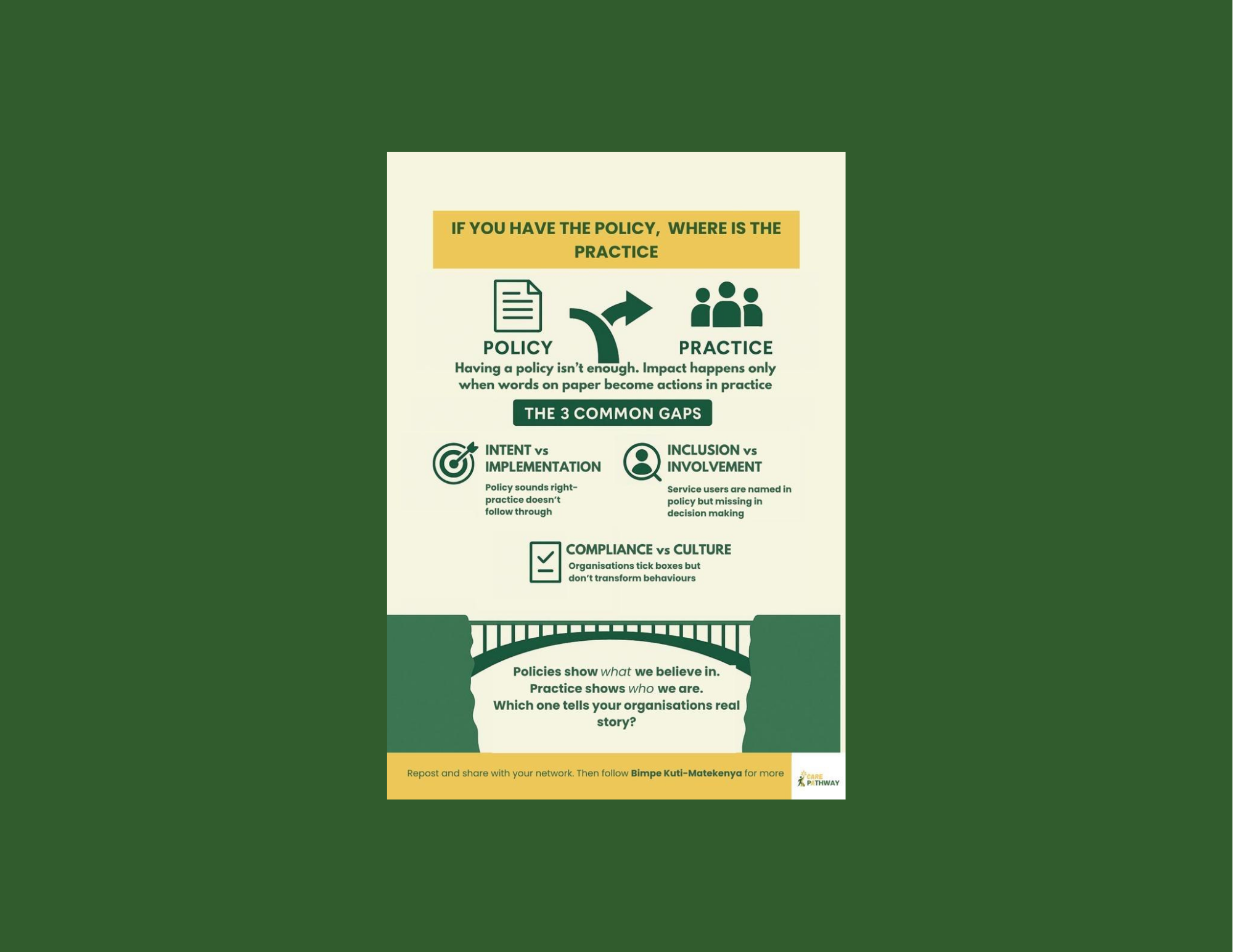
Download Infographic Here
We have built systems that move quickly. We celebrate rapid response. We reward throughput. We measure success in activity, outputs, and how fast we can “deliver.” For a long time, this has felt like progress.
But here is the uncomfortable truth - a fast system is not the same as an effective system. Across public health and social care, speed has become a proxy for performance. It gives the appearance of efficiency. It creates motion. It fills dashboards and reports. But motion, on its own, is not progress.
The question we rarely stop to ask is this:
What is all this speed actually producing?
The Quiet Problem with Speed
In practice, speed has reshaped how we think about care. It shows up in the questions we ask every day:
These are not insignificant questions. In moments of crisis, speed matters. Urgency saves lives. But when speed becomes the default logic of the system, rather than the exception, it begins to erode the very outcomes we are trying to achieve. We start to see systems that are constantly moving, but rarely settling. Services that are busy, but not always effective. Communities that are repeatedly engaged, but not meaningfully changed. Initiatives appear with urgency and disappears also just as quickly. Workforces operate in a constant state of acceleration, with little space to recover. People are processed through systems that move efficiently but do not always hold them.
Speed creates activity. But activity is not the same as impact.
Public Health: The Work That Cannot Be Rushed
Public health has always operated on different timescales. The outcomes we care about, such as reducing inequalities, improving life expectancy, strengthening communities, are not delivered quickly. They are built over time, through consistency, trust, and sustained effort. And yet, even here, we see the pull of speed.
But the reality remains unchanged: You cannot reduce health inequalities at speed.
You reduce them through stability:
Public health does not fail because we move too slowly. It fails when we fail to stay.
Social Care: When Care Becomes a Task
Nowhere is the impact of “speed thinking” more visible than in social care. A system optimised for speed inevitably reduces care to tasks. Visits become time slots. Support becomes a checklist. People become something to move through the system efficiently. But care was never designed to work this way. The outcomes we care about in social care are not transactional. They are relational - Independence, Recovery, Dignity.
These are not delivered through efficiency alone. They are built through presence through continuity, trust, and human connection.
At its core, the distinction is simple, but profound:
A system built for speed delivers care to people
A system built for stability delivers care with people
And it is in that shift - from to, to with, that real outcomes begin to emerge.
Lived Experience: Beyond Token Involvement
There is now widespread recognition that people with lived experience must be involved in shaping services. But involvement, when driven by speed, risks becoming superficial.
And then the system moves on. But inclusion is not the same as influence.
Co-production cannot be rushed. It requires something that fast systems struggle to sustain: time.
Without stability, involvement becomes performative. With stability, it becomes transformative.
Systems That Hold, Not Just Move
Across integrated care systems and wider reform agendas, there is a strong emphasis on transformation. But transformation without stability risks becoming fragmentation.
Ultimately, the question is not -
how fast a system can move. It is whether it can hold.
A fast system can still fail. A stable system, by contrast, absorbs pressure, adapts over time, and endures.
What People Actually Experience
From a lived experience perspective, people do not describe systems as “efficient.”
They describe them as:
No one really says, “I need a faster system.” What they say often and indirectly, is:
“I need a system I can rely on.”
And reliability is not built through speed. It is built through stability.
A Different Question for the Future
Conversations about transforming health and social care need to shift the question that sits at the centre of system design.
Not: How fast is the system?
But: How well does it hold people?
Speed delivers activity. But stability delivers outcomes. We do not build better systems by making them faster. We build better systems by making them stronger, more consistent, and more human. So, as we design the future of public health and social care, the challenge is not to accelerate. It is to anchor.
Don’t Optimise for Speed. Optimise for Stability.
PS: Let’s keep empowering excellence in Public Health and Social Care. Download the Infographic for your professional reflection and reminder as you design care systems and public health interventions.
Comment Stability if you are currently building, transforming or innovating for health and social care practice.
.png)