

If You Have the Policy, Where Is the Practice?
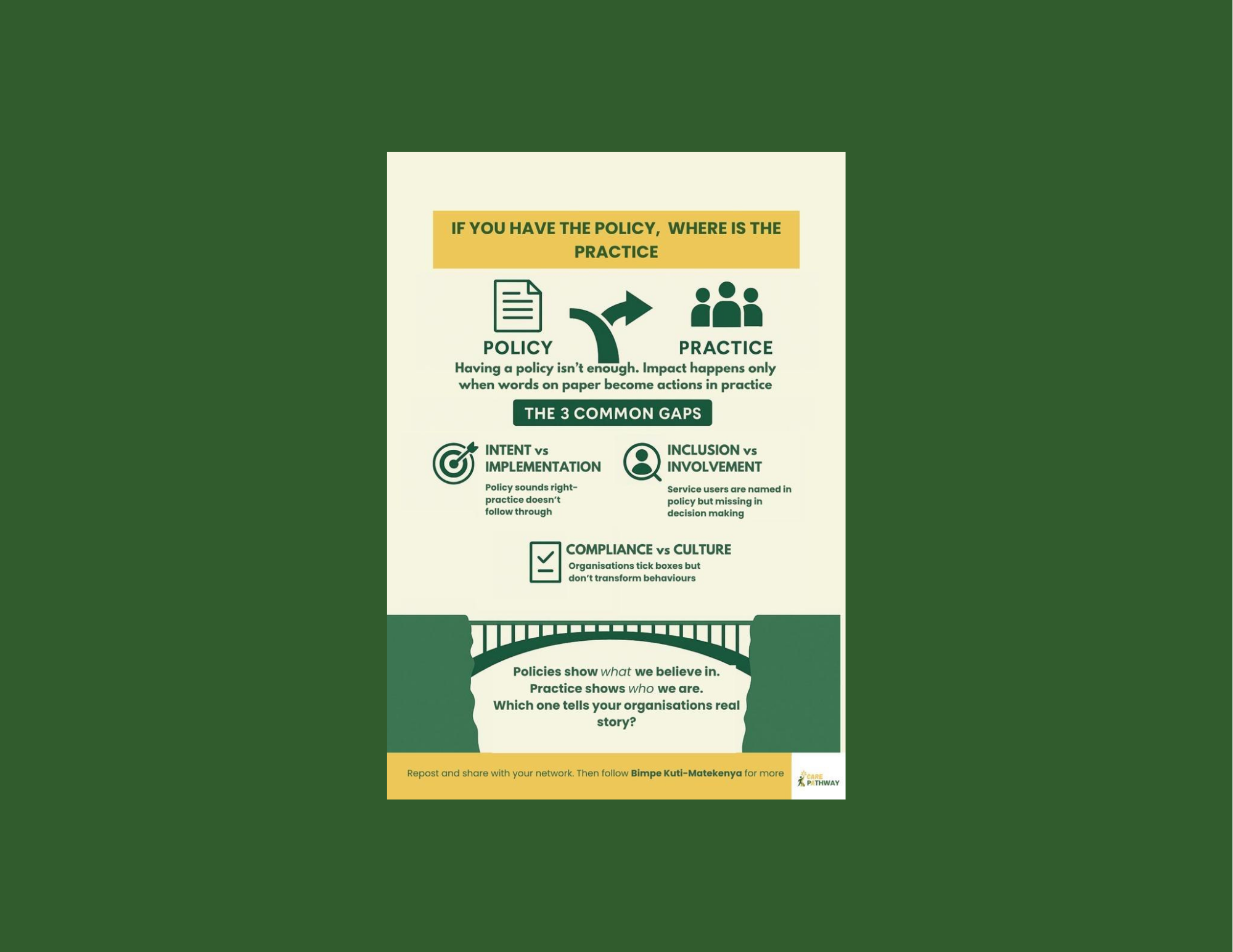
Across health and social care, we are surrounded by good policy. Frameworks, strategies, and national plans abound, yet on the ground, too many people still experience a care system that feels disconnected, fragmented, or simply unsustainable.
So, the question remains: If you have the policy, where is the practice?
What the CQC’s State of Care 2024/25 Report Tells Us
This question resonates strikingly in the recently published Care Quality Commission report: State of Care 2024/25 The report clearly signals areas of strength and improvement, yet simultaneously exposes gaps between policy and delivery. It highlights that while frameworks exist, the gap between policy and meaningful practice remains too large.
It paints a picture of commitment across systems, but also of continued strain, such as workforce shortages, inequitable access, and inconsistent quality, which dilutes the impact of even the best-crafted policies.
That call could not be more timely.
From Paper to People
Policies show what we believe in; Practice shows who we are.
Yet between the two lies a persistent gap often caused not by lack of guidance, but by lack of culture. Culture that involves people.
A culture that checks whether lived experience voices are evident in care delivery. A culture that doesn’t just measure whether policies exist, but whether they manifest in meaningful, equitable care, across all groups, including those historically marginalised.
If the CQC report offers one message, it is this: Having the policy is not enough.
We must ensure every policy is lived out through:
People with lived experience at the table, not as guests, but as partners.
Collaborative practice that values shared learning across systems.
Kindness as culture, the heartbeat of sustainable improvement.
“A policy without practice is like a map without a journey - the destination is written, but no one arrives.” — Bimpe Kuti-Matekenya
Lived Experience as Real Data
In my work, I have long argued that lived experience is not anecdotal. It is evidence that is crucial to delivering the Fit for Future: NHS 10 Year Plan for England. When people share their stories of care - as patients, carers, professionals or providers, they are not offering commentary, they are offering data.
It’s this real-world evidence that can lead to safer, more informed decisions and more compassionate systems. It is proof that when we listen differently, we lead differently.
When policy meets practice through lived experience, transformation happens - tangibly, measurably, humanly.
The Challenge for All of Us
Whether you are a policymaker, practitioner, care provider, researcher or advocate, in all things Health and Social Care,
the question isn’t just what your policy says, but what your practice shows.
If you have the policy, where is the practice? If you have the frameworks, where are the people? and if you have the evidence, where is the equity?
Let’s move beyond policies written in documents to practices felt in people’s lives. That’s where transformation happens and that’s where I believe our collective effort must now be focused.
What does your practice show? What would you add to this conversation?
Share in the comments and let’s build a people centred public health and social care system together.
About the Author: Bimpe is a Public Health and Social Care researcher, and educator passionate about re-centring lived experience in health and care systems. Bimpe’s blog - Care Pathway, is a platform empowering excellence in health and social care. Bimpe champions person-centred practice, service user and carer involvement, and workforce development through training, research, and strategic coaching. Through her teaching, public speaking, research and writing, she supports health and care professionals, leaders, and educators to embed co-production, lead with empathy, and create systems where every voice matters.
Follow for insights on person-centred leadership, service user and carer involvement, and innovation in public health and social care.
